The Unseen Guardian: Why Professional Firestopping is Non-Negotiable for Your Data Center
In today's digital world, your data center or server room is the heart of your operation. It houses your most critical assets, processes, and information. While you've likely invested in sophisticated active fire suppression systems like sprinklers and alarms, there's a silent, unseen guardian that is equally, if not more, critical to protecting your infrastructure: passive fire protection. For businesses across the Niagara Region, understanding the role of professional firestopping is the key to ensuring true operational resilience and safeguarding against catastrophic loss.
Beyond Sprinklers: The Critical Role of Compartmentation
Active fire protection systems are designed to extinguish a fire once it has started. Passive fire protection, specifically firestopping, is designed to contain a fire at its source. Think of it like the bulkheads in a ship; if one section is breached, the sealed compartments prevent the entire vessel from flooding.
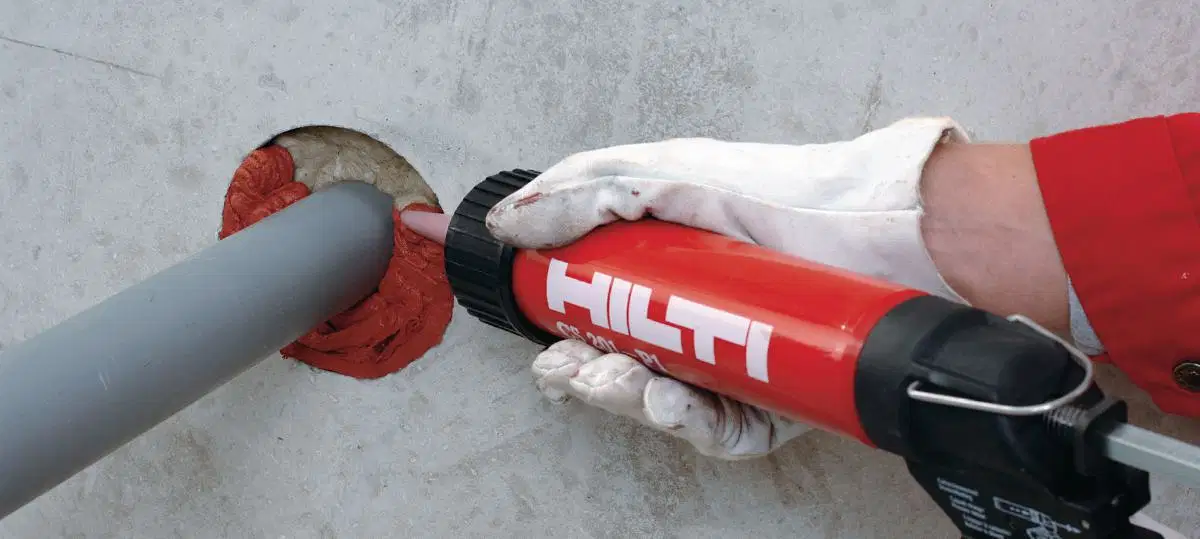
In a building, firestopping works on the same principle. It involves using specialized materials to seal any opening or joint in a fire-rated wall or floor assembly. These openings, known as penetrations, are necessary for running cables, pipes, and ductwork. However, if left unsealed, they act as highways for fire, smoke, and toxic gases to travel rapidly from one room to another. In a data center, where sensitive electronics can be destroyed by smoke and heat long before flames ever reach them, this containment is absolutely vital. Effective firestopping maintains the integrity of your fire-rated barriers, buying invaluable time for active systems to work and for personnel to evacuate safely.
Data Centers Present Unique Firestopping Challenges
Server rooms are unlike any other commercial space, and they present a unique set of challenges that demand a specialized approach to fire protection.
- High Density of Penetrations: The sheer volume of power cables, data lines, and cooling pipes creates a complex web of penetrations. Every single one of these openings must be properly sealed. High-density cable trays, in particular, require specific, tested systems to prevent fire from racing along the cables.
- Sensitive and High-Value Equipment: The financial and operational cost of losing servers, switches, and storage arrays is immense. Smoke, corrosive gases, and even the residue from some fire suppression systems can cause irreparable damage. Containment is the first and best line of defense.
- Critical Uptime Requirements: Downtime is not an option. A small, contained electrical fire is a manageable problem. A fire that spreads throughout the facility is a disaster that can take a business offline for weeks or months. Firestopping helps isolate an incident, protecting the rest of your critical infrastructure.
- Complex Airflow Management: Data centers rely on precisely controlled HVAC systems for cooling. These systems can unfortunately accelerate the spread of smoke. Properly sealed penetrations ensure that your fire-rated walls function as intended, without compromising the intricate airflow needed to keep your equipment cool.

Why Professional Installation is the Only Option
Firestopping is not a simple caulking job; it's a life-safety science. Navigating the strict requirements of the Ontario Building Code and ensuring true compliance requires certified professionals who understand the complexities of these systems.
- Code Compliance and Liability: The Ontario Building Code mandates that penetrations in fire separations be sealed with a listed firestop system that has been tested to meet specific standards (like ULC-S115). Using the wrong product or improper installation techniques not only fails to provide protection but can also create significant legal and insurance liabilities.
- Tested and Approved Systems: A professional installer has access to and knowledge of hundreds of tested, UL/ULC-listed firestop systems. The correct system depends on the type of penetrating item (e.g., copper pipe vs. plastic pipe vs. data cable), the type of barrier being penetrated, and the required hourly fire rating. There is no one-size-fits-all solution.
- Precision and Expertise: The performance of a firestop system is entirely dependent on the quality of the installation. Professionals ensure the correct material depth, proper tooling, and adherence to the manufacturer's exact specifications. This meticulous attention to detail is what guarantees the system will perform as designed under fire conditions.
In addition to firestopping, ensuring all gaps and joints are sealed with professional interior caulking can further enhance containment by controlling airflow and preventing the initial spread of smoke.
Protect Your Most Critical Assets
Your data center is too important to leave its protection to chance. While active suppression systems are essential, they are only one part of a complete fire safety strategy. Robust, professionally installed firestopping provides the foundational passive protection that contains threats, protects valuable assets, and ensures business continuity.
If you're unsure about the state of your server room's passive fire protection, don't wait for an inspection or an incident to find out. The team at Niagara Caulking & Firestopping has the certified expertise to assess your facility and install the correct, code-compliant systems to protect your operations. Contact us today to schedule a consultation and ensure your critical infrastructure in the St. Catharines area is properly secured.