
Planning a Basement Reno? Don't Overlook This Crucial Safety Step
Finishing your basement is one of the best home improvement projects you can tackle. Whether you're creating a family rec room, a home office, or a popular in-law suite, a basement renovation adds valuable living space and boosts your property's value. Here in the St. Catharines area, homeowners are constantly looking for ways to make the most of their homes. But amidst the excitement of choosing flooring and paint colours, there's a critical, often invisible, safety feature that can't be ignored: firestopping.
Many people think fire safety is just about smoke detectors and extinguishers. While those are essential, true protection lies in containment—stopping a fire from spreading long enough for everyone to get out safely. This is where professional firestopping comes in. It’s not just a good idea; it’s a requirement of the Ontario Building Code. In this post, we'll break down what firestopping is, why it's absolutely vital for your basement reno, and how it provides peace of mind for your family.
What Exactly is Firestopping?
Think of firestopping as the seal in your home's fire defence system. It's a method of passive fire protection used to seal openings and joints in fire-rated walls and floors. When your renovation is complete, you won't see it, but its job is crucial.
During any construction, holes are cut through drywall and floor joists to run essential services like plumbing pipes, electrical wires, and HVAC ducts. While necessary, each of these openings—called service penetrations—creates a potential pathway for fire and smoke to travel rapidly from the basement to the rest of your house. A small fire in a utility room could spread upstairs in minutes through these unsealed gaps.
Firestopping involves using specialized materials, like fire-rated sealants, collars, and putties, to fill these openings completely. When exposed to heat, these materials expand to form a tight seal, blocking flames, toxic smoke, and hot gases. This compartmentalizes the fire, containing it to its point of origin and giving your family precious time to escape.
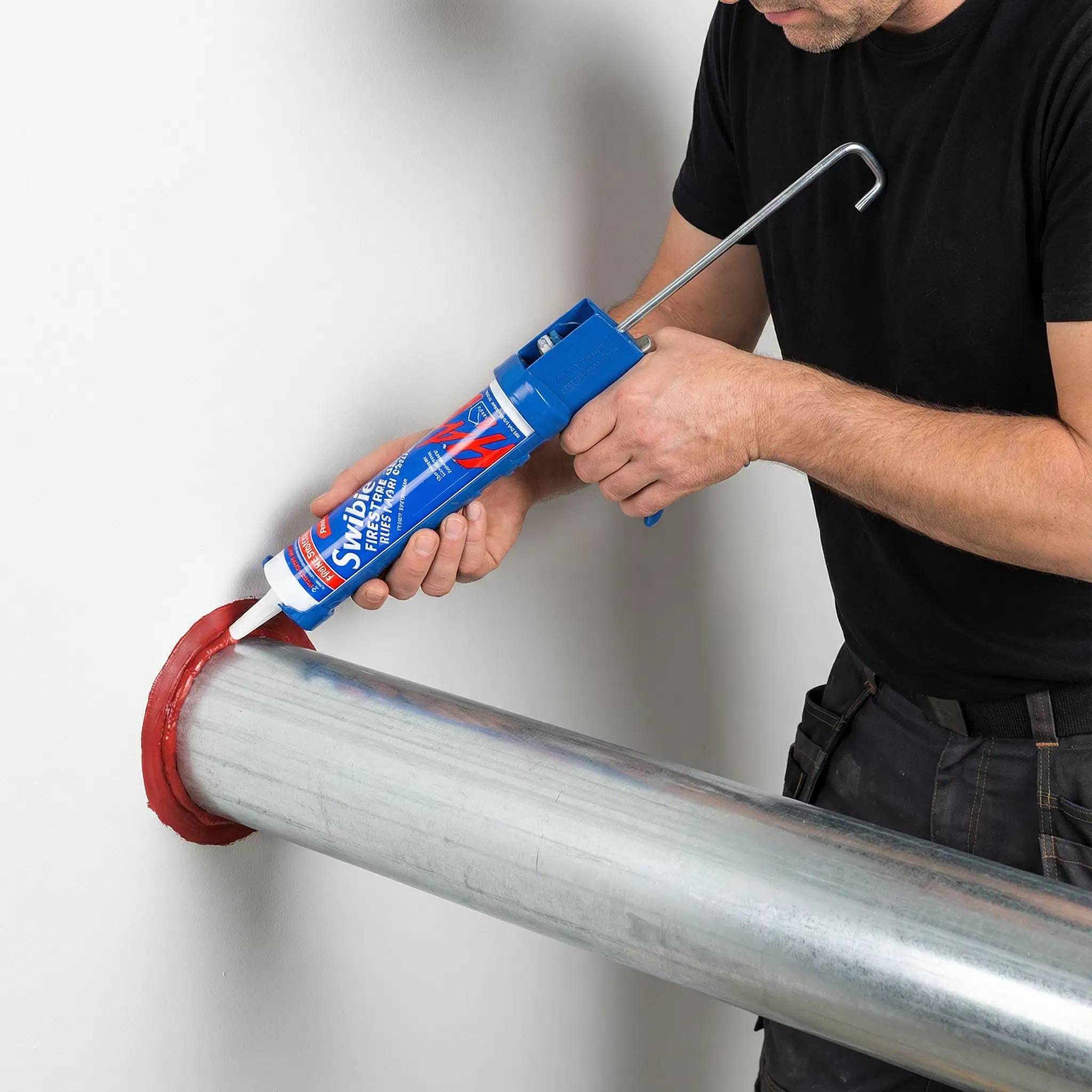
Common Trouble Spots in a Basement Renovation
Understanding where your basement is most vulnerable is key to ensuring it's properly protected. A professional contractor will know to look for these hidden dangers, but as a homeowner, it’s good to be aware of them too.
- Plumbing and Electrical Penetrations: Every pipe for your new basement bathroom and every wire for your new lighting creates a breach in the fire barrier. These are the most common pathways for fire spread.
- HVAC Ductwork: The openings for heating and cooling vents are large and can act as superhighways for smoke and flames if not properly sealed with fire-rated materials.
- Top-of-Wall Joints: The small gap between the top of a new wall and the ceiling or floor joists above is another critical area. It might look insignificant, but it's a direct route for fire to bypass the wall entirely.
- Recessed Lighting and Speakers: Pot lights and in-ceiling speakers are popular features, but each one requires cutting a hole in the ceiling. These must be installed with fire-rated covers or enclosures to maintain the ceiling's fire-resistance rating.
For projects like an in-law suite, these requirements become even more stringent, as building codes mandate a complete and robust fire separation between the two living units.

More Than Just Fire Safety: The Added Perks of Proper Sealing
While the primary goal of firestopping is life safety, the benefits of meticulously sealing every gap and penetration in your basement extend even further. The same principles that stop fire and smoke also contribute to a more comfortable, efficient, and quiet home.
Properly sealing these openings significantly reduces air leakage. This means less draftiness and better temperature regulation, which can lead to lower heating and cooling bills. This process is closely related to professional interior caulking, which focuses on sealing gaps around windows, doors, and baseboards to maximize energy efficiency.
Furthermore, the dense materials used for firestopping are also excellent at dampening sound. This can lead to a noticeable reduction in noise travelling between the basement and the main floor, creating a quieter and more peaceful living environment for everyone. Finally, sealing these gaps helps keep out dust, moisture, and pests, contributing to better indoor air quality and a healthier home.
Make Your Basement Renovation Safe and Secure
A basement renovation is a significant investment in your home and your family's quality of life. Ensuring it's done safely and to code is the most important part of that investment. Firestopping isn't a corner you can afford to cut; it's a fundamental component of a responsible and professional renovation that provides lasting peace of mind.
If you're planning a home improvement project in the Niagara Region, don't leave your family's safety to chance. The team at Niagara Caulking & Firestopping has the expertise to ensure your project is safe, compliant, and built to last. Contact us today to discuss how our professional firestopping and interior caulking services can protect your home and family.