Beyond the Sprinklers: Why Professional Firestopping is Non-Negotiable for Your Niagara Business
Undertaking a commercial renovation or a new fit-out is an exciting time for any business owner in the Niagara Region. You're focused on layouts, finishes, and creating a space that serves your customers and employees. But amidst the visible details, there's a critical, often unseen, safety system that is fundamental to your project's success and legal compliance: passive fire protection, specifically, professional firestopping.
While active systems like sprinklers and alarms are designed to suppress a fire, firestopping is a passive system that contains it. It's the unsung hero that compartmentalizes a building, preventing the rapid spread of fire, smoke, and toxic gases through openings in fire-rated walls and floors. This containment is not just a best practice; it's a strict requirement of the Ontario Building Code. Getting it wrong can lead to failed inspections, costly project delays, and significant liability.
What Exactly is Firestopping and Where is it Needed?
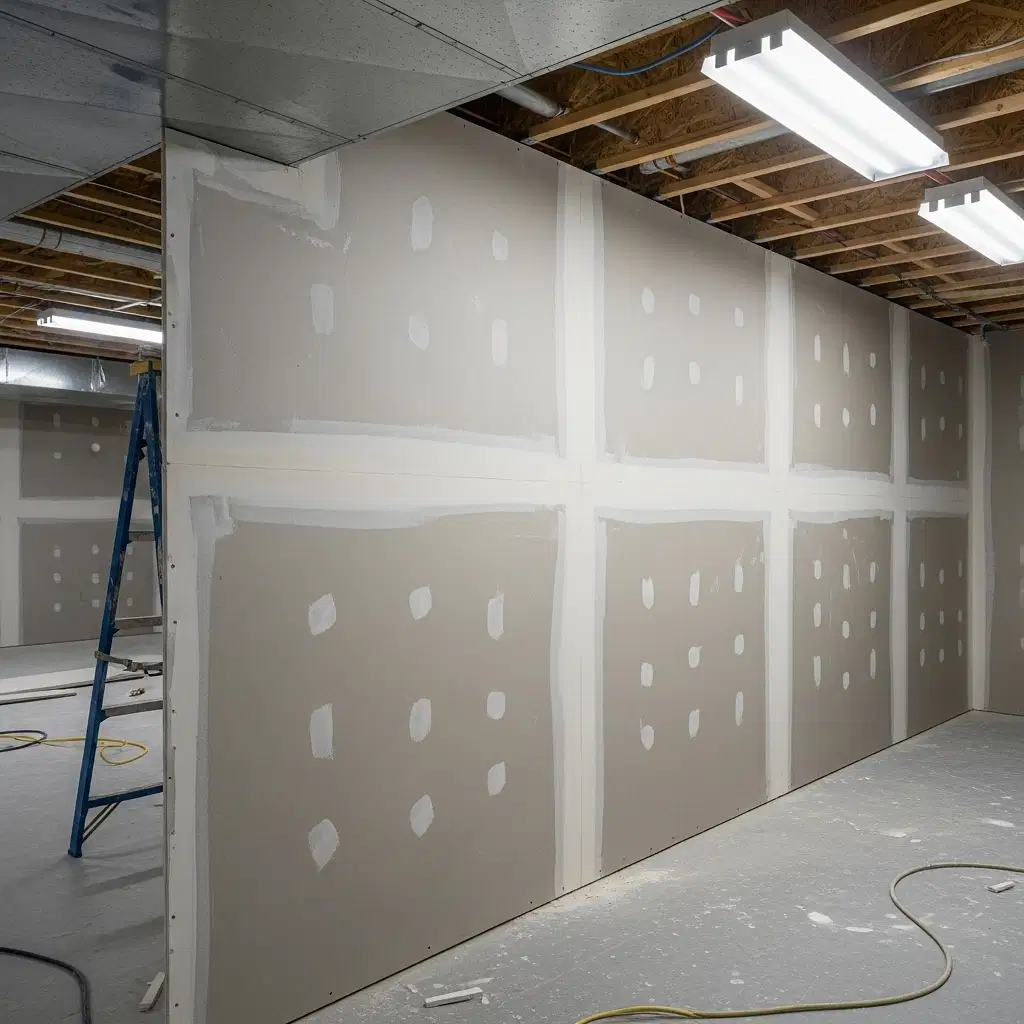
Think of a fire-rated wall as a solid barrier designed to hold back a fire for a specific period—say, one or two hours. This rating is immediately compromised the moment a hole is cut for pipes, wires, or ducts. Firestopping is the process of reinstalling that fire-resistance rating by sealing those openings with specialized materials and methods.
These systems are not just a simple bead of caulk. They are engineered solutions, tested and listed by organizations like Underwriters Laboratories (UL), that are designed to work together. A proper firestop system includes the specific sealant, collar, or wrap, applied at the correct depth and in the right configuration for the type of wall and the penetrating item.
Common areas in a commercial space that require professional firestopping include:
- Mechanical Penetrations: Openings for HVAC ducts, plumbing pipes (both plastic and metallic), and sprinkler lines.
- Electrical Penetrations: Pass-throughs for electrical conduits, communication cables, and cable trays.
- Structural Joints: Gaps between fire-rated walls and floors, curtain wall joints, and control joints.
Essentially, any breach in a fire-rated assembly must be properly sealed to maintain the building's safety integrity.
The Risks of Improper Installation: More Than Just a Failed Inspection
In the construction industry, navigating regulatory compliance is a major challenge. The Ontario Building Code is complex and constantly evolving, especially regarding life safety systems. Attempting to cut corners on firestopping or assigning the task to an uncertified trade can have severe consequences that go far beyond the initial cost savings.
Project Delays: A failed inspection from a building official means work stops. You will be required to bring in a certified professional to remediate the incorrect work, which costs both time and money, pushing back your opening date and impacting your revenue.
Financial Liability: In the event of a fire, if it's discovered that improper firestopping contributed to the spread and subsequent damage, your insurance claim could be denied. Worse, you could be held legally liable for property damage and, most critically, for any injuries or loss of life.
Compromised Safety: The ultimate cost is the safety of your employees, customers, and first responders. A properly contained fire is a manageable one. An uncontrolled fire that spreads rapidly through unsealed openings can become catastrophic in minutes. This is a responsibility that cannot be overlooked.
Choosing a Certified Partner for Peace of Mind
Given the stakes, it's clear that firestopping is a specialized trade that demands expertise. It's not a task for a general labourer or a different trade to handle on the side. When vetting a contractor for your commercial project, it's essential to ensure they have the specific qualifications for this critical work.
Look for a partner who can demonstrate:
- Certified Expertise: Technicians should be trained and certified in the application of various manufacturers' firestop systems.
- Code Knowledge: A deep understanding of the Ontario Building Code and local requirements is non-negotiable.
- Proven Experience: They should have a portfolio of similar commercial projects and be able to explain the specific systems required for your application.
- Proper Documentation: A professional will provide documentation of the systems used (e.g., UL system numbers) for your records and for the building inspector.
By hiring a dedicated specialist, you are not just buying a product; you are investing in a correctly installed life safety system that ensures compliance, protects your investment, and provides true peace of mind.
Protect Your Business with Professional Firestopping
Your commercial space is one of your most significant assets. Protecting it, and the people inside, requires a comprehensive approach to safety. While you focus on the design and function of your new space, let a certified expert handle the critical details of passive fire protection.
Whether you're renovating a retail store, fitting out an office, or constructing a new facility in St. Catharines or across the Niagara Region, ensuring your building is compliant and safe is paramount. Don't leave this crucial step to chance.
If you have questions about your project's requirements, our team at Niagara Caulking & Firestopping is here to help. We provide professional, certified firestopping services to ensure your business is protected and fully compliant with all safety codes. Contact us today for a detailed consultation and quote.