Beyond Sprinklers: Protecting Your Industrial Facility with Specialized Firestopping
The logistics and warehousing sector across the Niagara Region is expanding rapidly. These vast, complex buildings are the backbone of our local economy, but their very nature—high ceilings, open spaces, and complex automated systems—creates unique and significant fire safety challenges. While sprinklers and alarms are essential first-line defenses, they don't stop the hidden spread of fire and smoke through walls and floors. That's the critical job of passive fire protection, specifically firestopping.
For facility managers and business owners in St. Catharines, understanding firestopping isn't just about ticking a box for compliance; it's about safeguarding your people, your inventory, and your entire operation from catastrophic disruption. This guide will explore why standard fire protection isn't enough for industrial facilities and highlight the critical areas that demand professional firestopping solutions.
Why Standard Fire Protection Falls Short in Warehouses
In a typical office or residential building, fire spread is slowed by smaller, compartmentalized rooms. A warehouse or distribution center is the exact opposite. It's a massive, open area, often filled with highly combustible materials like cardboard, plastics, and wooden pallets. A fire that starts in one corner can spread with terrifying speed.
Here’s why relying solely on active systems like sprinklers is a risk:
- Uncontrolled Airflow: High ceilings and powerful HVAC systems can quickly push smoke and toxic gases far from the source, creating a hazardous environment long before sprinklers are activated.
- Hidden Pathways: Modern facilities are a web of penetrations. Electrical conduits, data cables, plumbing lines, and complex conveyor systems all pass through fire-rated walls and floors. Without proper sealing, these openings act as superhighways for fire and smoke, rendering those expensive fire-rated walls ineffective.
- Operational Complexity: A fire doesn't have to destroy the building to cripple your business. Smoke and water damage from a localized event can ruin millions in inventory and shut down operations for weeks, all because the fire wasn't properly contained at its source.
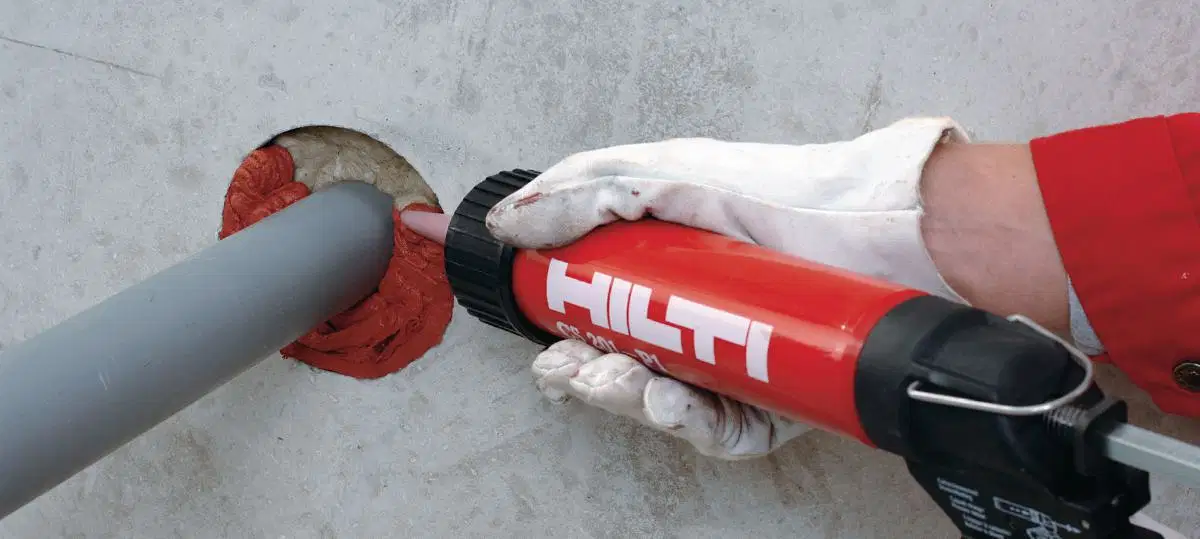
Effective firestopping addresses these issues by creating a complete seal around every penetration, restoring the fire-resistance rating of the wall or floor assembly. This process of compartmentalization is a cornerstone of the Ontario Building Code and is absolutely vital for life safety and asset protection.
Critical Firestopping Points in a Logistics Facility
Knowing where to apply firestopping is just as important as knowing how. A thorough assessment by a professional will identify numerous critical points in a large-scale facility. Some of the most common and crucial areas include:
- Conveyor and Automation System Penetrations: These are among the largest and most complex openings in a warehouse. Sealing the gaps where conveyor belts and sorting machinery pass through fire separations requires specialized systems designed to handle movement and complexity while maintaining a fire-rated barrier.
- Electrical and Data Cable Trays: The sheer volume of cabling required to run a modern logistics center creates countless pathways for fire. Firestopping these bundles requires materials that can expand and seal off openings as cable jackets burn away.
- Curtain Wall and Slab-Edge Joints: The gap between the edge of a concrete floor slab and the exterior curtain wall is a major, often overlooked, channel for fire to travel vertically from floor to floor. A specialized firestop joint system is essential to seal this gap.
- Mechanical and Plumbing Penetrations: Every pipe, duct, and conduit that passes through a rated wall or floor must be sealed with a firestop system appropriate for that specific type of penetrant. Using a generic sealant is not compliant and will fail in a fire.
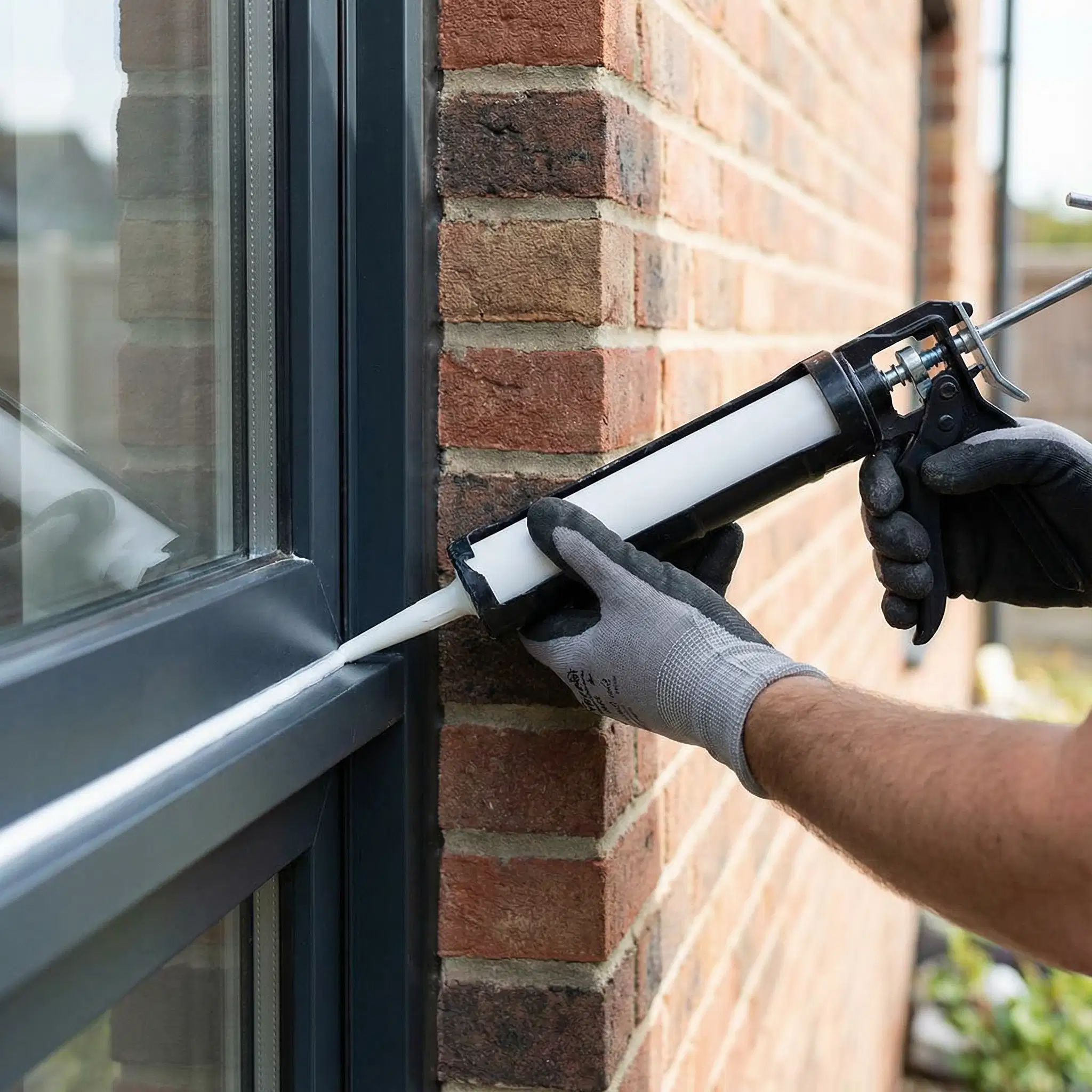
Beyond fire safety, ensuring all gaps and joints are sealed with professional interior caulking also improves energy efficiency and prevents pest intrusion, contributing to a healthier and more cost-effective operational environment.
Compliance is Non-Negotiable: The Importance of Professional Installation
Firestopping is not a simple caulking job; it is an engineered life-safety system. The Ontario Building Code mandates that firestop systems must be installed according to their tested and listed designs from certified bodies like ULC (Underwriters Laboratories of Canada). This is not a place for guesswork or cutting corners.
Using the wrong product, applying it at an incorrect depth, or failing to prepare the surface properly can result in a complete failure of the system during a fire. This not only puts lives at risk but can also lead to failed inspections, costly rework, and potential liability issues.
A professional firestopping contractor brings critical expertise to your project:
- System Knowledge: They can identify the correct, tested system for every unique penetration type in your facility.
- Certified Technicians: Their team is trained in the precise installation methods required for each product to ensure it performs as designed.
- Documentation: They provide the necessary documentation and certification for your records and for building inspectors, ensuring a smooth and compliant project.
Protecting your investment, your inventory, and your people requires a proactive and professional approach to fire safety. By looking beyond the sprinklers and focusing on passive fire protection, you create a truly resilient facility.
If you're managing, building, or renovating an industrial facility in the St. Catharines area, don't leave its safety to chance. Contact Niagara Caulking & Firestopping today for a comprehensive assessment of your building's critical firestopping and sealing needs.